
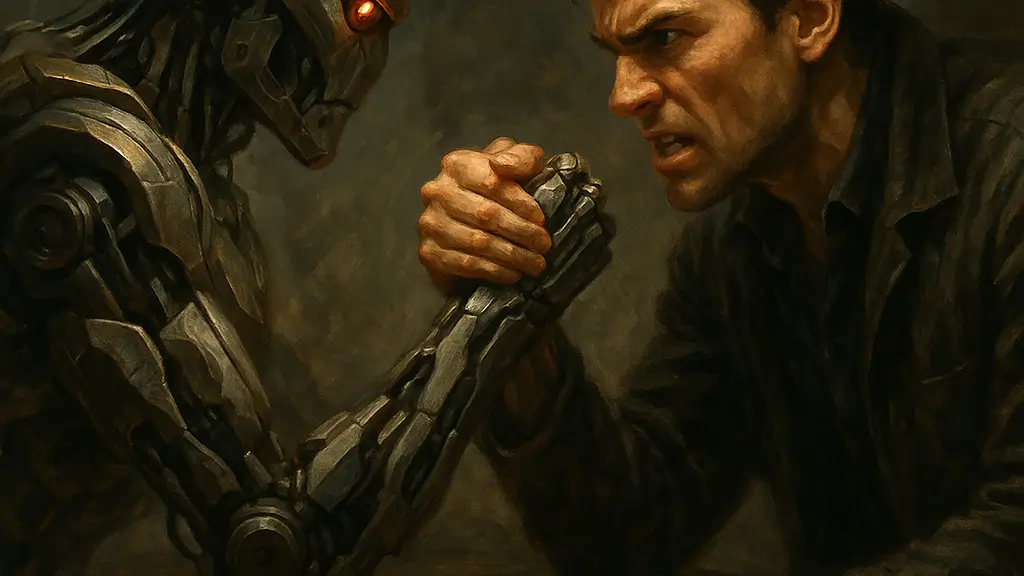
AI has taken the business world by storm. Consumers are increasingly relying on AI as part of their daily routines, while organizations are identifying ways to introduce AI into their operations to increase efficiency and spur innovation. AI’s speed and ability to generate answers from vast data stores adds to the confidence of individuals and organizations using its outputs.
In general, society has become comfortable with computer-generated outputs, and often rely on these outputs to inform their decision-making process. We utilize spreadsheets and other business tools to develop programs that generate outputs with data sets that are far more limited than those that can be consumed by an AI model.
So, what makes AI different?
Not only can AI consume vast amounts of data and scenarios to provide its outputs. These programs can further simulate intelligence to infer certain outcomes based on inputs. Because of these abilities, AI may be considered ‘smarter’ than humans. But is that really accurate? AI is considerably more informed than any human, but does being more informed equate to being more intelligent. And, if being more informed does equate to intelligence,
Should AI replace human intelligence?
An AI model may identify a ‘needle-in-a-haystack’ scenario from all the data it consumes and, in a perfect world, AI may even remove certain biases from decision-making. On its face, it would seem like a data-driven world could create a more fair or equitable outcome, especially for some financial products like credit and lending. However, if AI and data is the bridge to a more fair and equitable world
Are we enabling the demise of human discretion?
As a kid, I grew up watching and playing sports. I marveled how the greats of my day approached the game and defied the odds to produce iconic endings that we, sports fanatics, will never forget. Players and coaches made decisions based on the ‘feel of the game’ and ‘game flow’. This was an art for which some coaches and players excelled, and others came up short. Today, many in-game decisions are driven by analytics. Failure to follow the analytics can come with great scrutiny especially if the opposing decision leads to a negative consequence (e.g., losing the game). Coaches who consistently depart from the analytics could lose their job in the process or be ridiculed in the court of public opinion.
All sports have their iconic figures. These individuals are often students of the game and have developed an expertise forged from playing their sport at an early age to excelling at the highest levels in their sport. So, when I was watching the 2025 Stanley Cup Finals and heard Wayne Gretzky question (and disagree with) the analytics in the game strategy. I thought about this in the context of AI.
What happens when the experts disagree with the AI output?
Sports analytics have far fewer data points than AI models. Therefore, based on the premise that information access drives intelligence, AI models would be considered ‘more intelligent’ than analytics. If AI models are more intelligent than analytics and individuals (regardless of expertise) can be vilified by going against analytics:
Where does this leave human discretion?
Human emotion and discretion have allowed people and organizations to overcome the odds and produce many exceptional results. The complex functioning of the human mind is fascinating, unique, and extremely difficult to explain which also makes it very difficult to capture within a program, however, if the AI-movement continues to be about replacing human intellect instead of augmenting it, we may be living in a world where one can no longer find value in our expertise or desire our emotional intelligence to make decisions.
Sure, those who head down a different path, those who go against the grain may be considered foolhardy in the moment, but maybe we can learn a thing or two from them. Perhaps the courageous defenders of human intellect are on to something AI can’t fathom. It is our ability to go beyond the numbers and beyond the data which makes me hopeful that we can understand the power and value of human emotion, intelligence, and discretion and that these strengths will not become secondary to artificial intelligence.
#artificialintelligence #ai #chatgpt #cybersecurity #cyberresilience #humanconnection









Really thoughtful post, Jason. AI is impressive, but I agree that it shouldn’t replace human judgment. There’s still so much value in intuition, experience, and that gut feeling we sometimes need to trust.